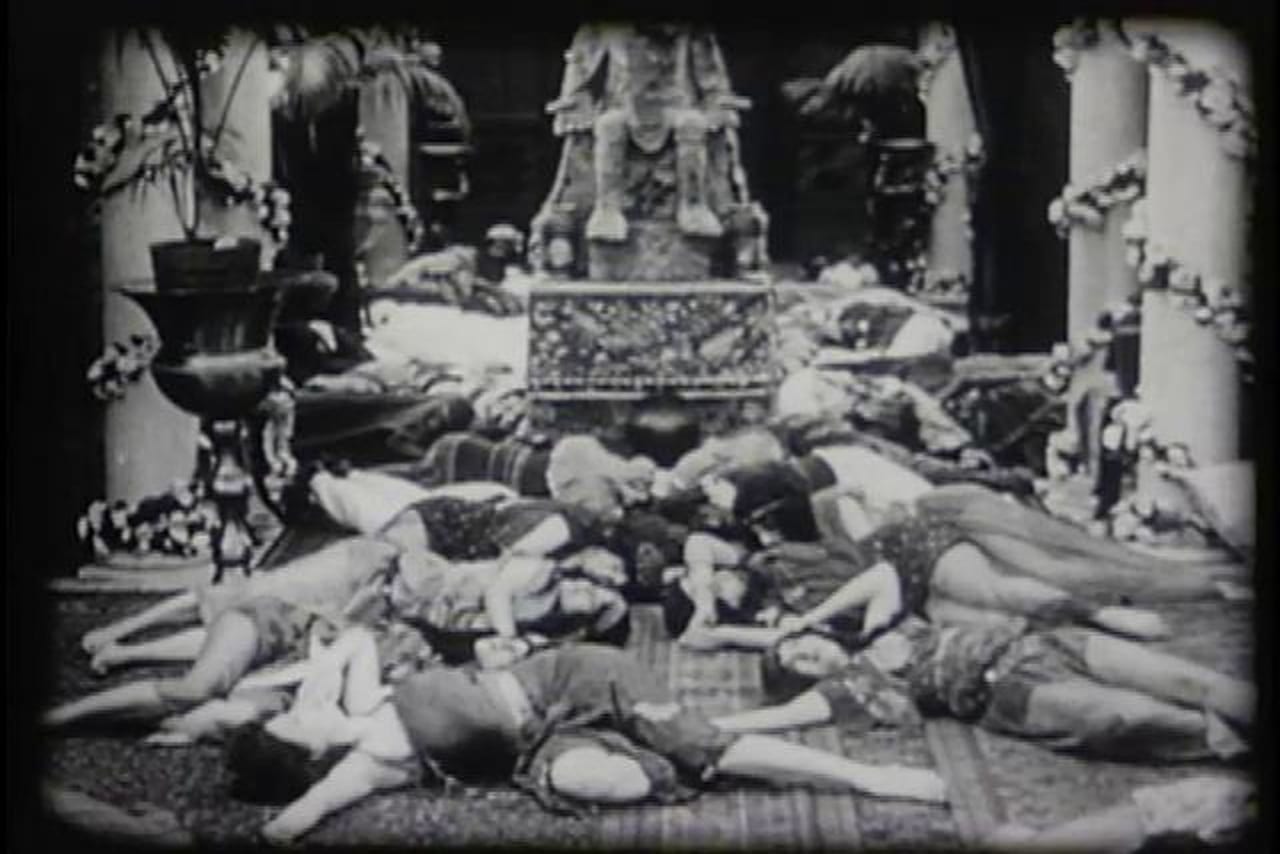
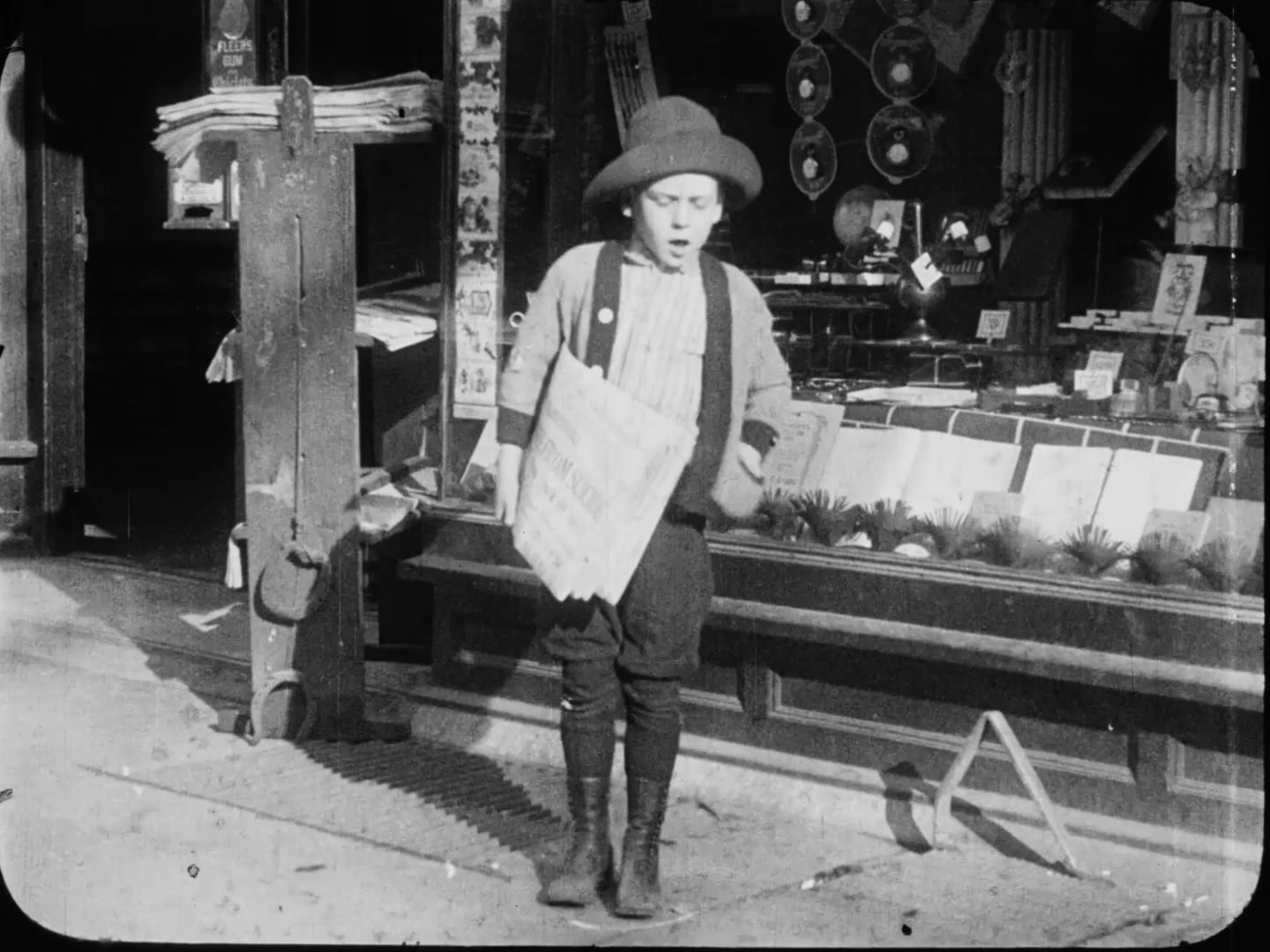
1914Thanhouser CompanyThree reelsDrama

The Miser’s Reversion

No copy you can watch online. No print is known to survive. What follows is what does: the release, the cast, the story, and what the trade press said at the time.

The story

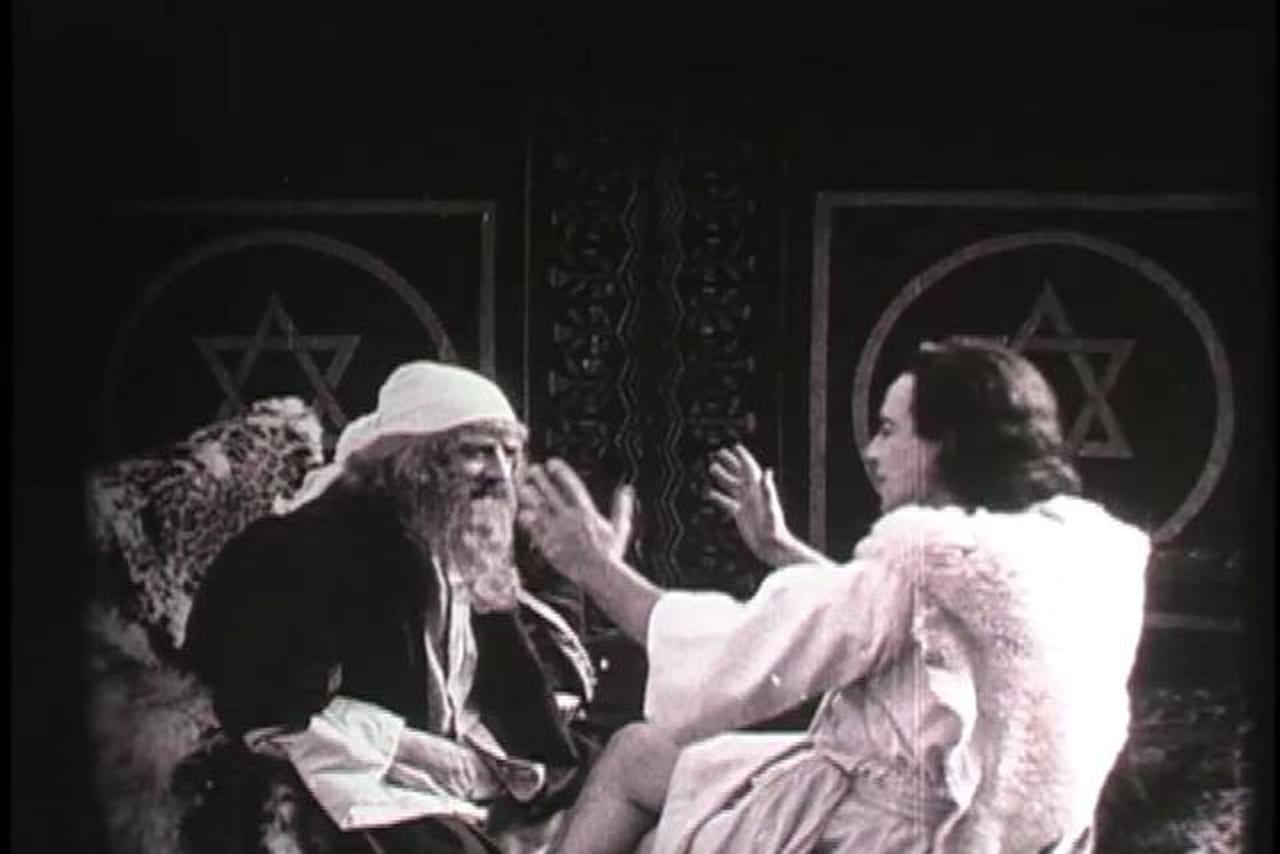
“Wrinkled, haggard, and 75 years old, John Grisley, a wealthy miser, has spent the later years of his life studying Darwin’s The Origin of the Species and other scientific works demonstrating the kinship of man to the higher primates. He is not so engrossed in the study of anthropology, however, that he fails to notice the growing attraction which his pretty daughter has for a penniless but otherwise worthy young man. Preferring to have his daughter marry a man of means, the aged miser discourages the young man’s attentions. Along comes the Great Lahaif Maharajah of India. The Maharajah and his two attendants are garbed in the brilliant colors of the Orient and display all the indications of great wealth. Although some might put the Maharajah in the street fakir class, Miser John receives him without question into his home, and the Indian, being a man of many parts, finds no difficulty in talking about the microcosm, the macrocosm, and the transmigration of souls. Miser John is pleased to learn that the wealthy Sahib from India thinks well of this daughter and would be willing to marry her.

“At a public demonstration of the Maharajah’s powers, Grisley is given a small dose of the Elixir of Life and is transformed from a wrinkled doddard of 75 to a hale man of 40. Pleased at the results obtained by a small dose of the elixir, Grisley swallows the whole bottle and quickly becomes, in turn, a young man, a boy, a baby, and eventually an ape. In his new shape the miser runs forth from the hall, but is avoided by everyone, including his own daughter. It is only when he exhibits a tattoo on his arm that his story of the Hindoo and his magic elixir is believed. Grisley is led back to the hall, where the Indian is forced to restore him to his original shape. Grisley has little use for the Maharajah after his experience, however, and willingly gives his consent to the marriage of his daughter to her youthful sweetheart.”

Summary from Reel Life · 21 March 1914
What the papers said

3 reviews

“In this drama Sidney Bracey, probably one of the most remarkable masters of makeup in this country, is a miserly old taxidermist who overworks his pretty little granddaughter [sic; synopsis says daughter] and will not allow her to marry the man of her choice, because he is not rich enough. An East Indian comes to the old man for a …

Read in full · 1 min

“In this drama Sidney Bracey, probably one of the most remarkable masters of makeup in this country, is a miserly old taxidermist who overworks his pretty little granddaughter [sic; synopsis says daughter] and will not allow her to marry the man of her choice, because he is not rich enough. An East Indian comes to the old man for a mounted tiger, and falls in love with the girl. He offers the miser $10,000 if he will consent to try the wonderful Elixir of Youth [sic; synopsis says Elixir of Life] he has invented on the condition that he be allowed to marry the girl. The old man, sitting by his fire smoking, dreams that he has answered the advertisement for a man of 80 which the East Indian had put in the paper. He takes an overdose and we see him revert to 40, to 30, to five years old, and then, passing through prehistoric and stone ages, he becomes a monkey. He is captured by the police, but an organ grinder claims him and he is forced to dance for the assembled crowd. His granddaughter recognizes the mark on his arm and the scientist comes to the rescue, bringing him back through the ages to what he was before. When he wakes the dream has taught him a lesson and he gladly consents to the girl’s marriage to the man she loves and gives her all the money he had hoarded for so many years. Mr. Bracey’s acting of the title role is a triumph, and though his make-up is so good as to render him absolutely repulsive as the monkey, the fact that it is all a dream keeps the picture from being in any way objectionable.”

The Morning Telegraph · March 8 1914

“This idea used in this three-part offering which pictures an old man as changing, under the influence of the elixir of youth, from infirm age to youth and so down through babyhood to prehistoric man into an ape, was the main interest of a recent Edison farce. Yet here Sidney Bracy, who takes the role of the miser, has been …

Read in full · 1 min

“This idea used in this three-part offering which pictures an old man as changing, under the influence of the elixir of youth, from infirm age to youth and so down through babyhood to prehistoric man into an ape, was the main interest of a recent Edison farce. Yet here Sidney Bracy, who takes the role of the miser, has been able to put something of horror and terror into the changing back which is fresh, very well done and effective. It would have been a startling picture in one reel. Here it drags a bit; yet will capture your attention none the less. The camera work is skillful and makes the transition seem wonderfully convincing.”

The Moving Picture World · 4 April 1914

More reviews

1 April 1914The New York Dramatic Mirror1 min

This review is reprinted in the narrative section of the present work.

March 27, 1914 (Friday)

No regular Thanhouser release because of the three-reel film of the preceding Tuesday.

Have you seen this film, or a print of it?

Prints of films thought lost still turn up in attics, private collections and archives. A record like this one is how the next one gets found.

Tell us about a print

Cast and crew

Cast
Arthur Bauer as the scientist
Eugene Redding as the organ grinder
Harry Benham as Jack, in love with May
John Lehnberg as the Hindoo
Miss Beautiful as May, his daughter
Sidney Bracy as John Grisley, the miser

Every name opens that person's page, with each film they appear in and which of them you can watch.

Watch instead

Films you can watch from the same company

Matched by cast, director and kind

More about this film

Bowers’ notes
  1. This film was planned as two reels and then expanded to three reels. 2. An expanded story by Peter Wade, based upon this film, appeared in The Motion Picture Story Magazine, May 1914.

From Volume II: Filmography of Q. David Bowers’ Thanhouser Films: An Encyclopedia and History, reproduced with permission and unchanged. Read the history of 1914 →

Cite as: Bowers, Q. David. Thanhouser Films: An Encyclopedia and History, “The Miser’s Reversion”. thanhouser.org/films/the-miser-s-reversion/

Where a print is held

Held by
No print known